
LION CITY HUB • NATIONAL EDUCATION & HERITAGE
Queenstown Heritage Trail
Trace the story of Singapore’s first satellite town and the public housing ideas it helped to test.
Queenstown’s Housing Firsts and Community Landmarks
Queenstown was planned by the Singapore Improvement Trust in 1952 as Singapore’s first satellite town. It was named in honour of Queen Elizabeth II to mark her coronation. Before then, the area had attap houses, farms and the former Buller Camp along Alexandra Road.
The first low-cost flats were completed in 1953, and Forfar House, finished in 1956, is regarded as Singapore’s first public housing skyscraper. After the Housing and Development Board took over in 1960, more than 19,000 homes were built here by 1968, alongside markets, schools and sports facilities.
Today, Queenstown Public Library and the Church of the Blessed Sacrament remain well-loved landmarks. The First HDB Blocks at Stirling Road mark a milestone in national housing, while Ridout Tea Garden offers a quiet Japanese-themed retreat.
Did You Know?
Queenstown was named after Queen Elizabeth II to commemorate her coronation in 1953.
Queenstown Public Library, opened in 1970, was Singapore’s first full-time branch library.


What Makes Queenstown Special

Queenstown Public Library
Opened in 1970 as Singapore’s first full-time branch library, it remains a well-loved neighbourhood space for reading and learning.
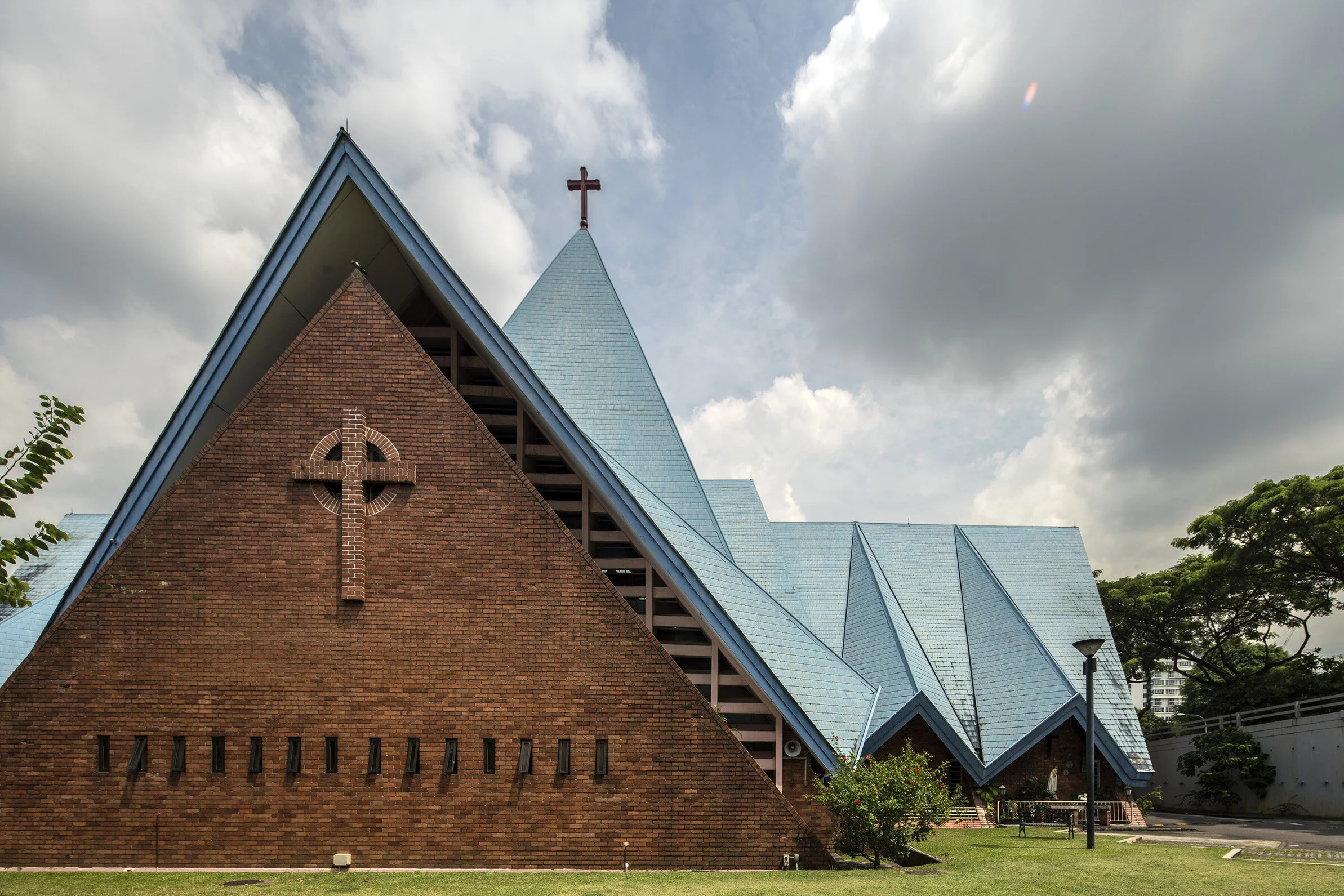
Church of the Blessed Sacrament
Known for its folded, origami-like roof, the church was designed to evoke the biblical “tent of meeting”.

First HDB Blocks at Stirling Road
Blocks 45, 48 and 49 Stirling Road, completed in 1960, were among the first flats built by the newly formed Housing and Development Board.
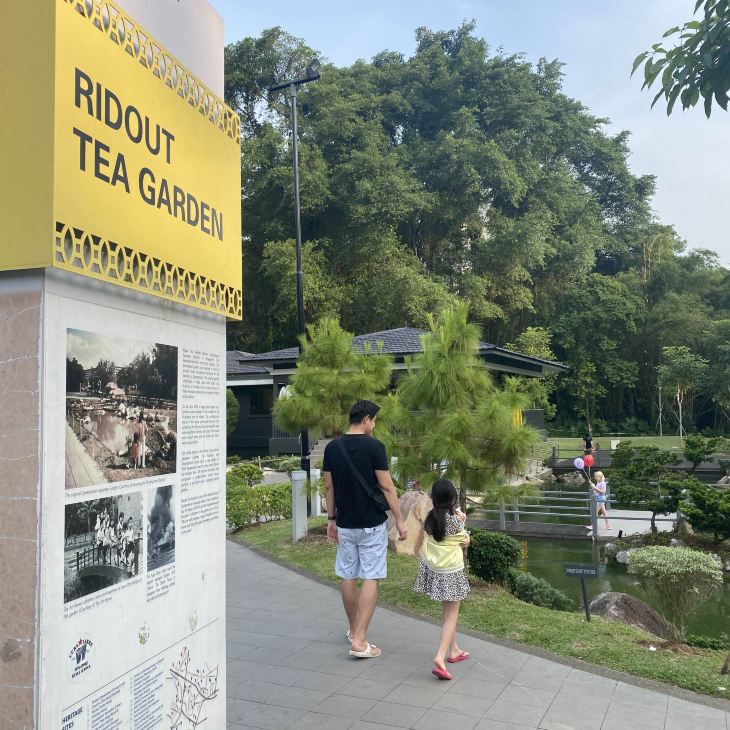
Ridout Tea Garden
Opened in 1970 as Singapore’s first Japanese-themed community garden, this quiet park offers a peaceful break from the surrounding estate.
Trail Routes
Route 1 Early Housing & Community Institutions
Explore how early public housing and community institutions shaped Queenstown’s role in Singapore’s post-independence development.
Duration: 75–105 minutes · Distance: Approx. 2.1 km · Stops: 4
1. First HDB Blocks
Blocks 45, 48 and 49 were among the first flats completed by the newly formed HDB. Their surviving setting anchors Queenstown’s role in Singapore’s public housing story.
2. Sri Muneeswaran Temple
The temple succeeded an earlier institution displaced by road widening. Its continuing presence reflects how religious communities adapted alongside the development of Queenstown.
3. Church of the Blessed Sacrament
Queenstown’s first Catholic church adds another religious tradition to the estate. Its distinctive architecture makes it a recognisable landmark within the surrounding housing landscape.
4. Queenstown Public Library
Singapore’s first full-time branch library represented an important investment in neighbourhood learning. Its conserved building preserves the civic ambitions associated with the early development of Queenstown.
The Dawson heritage trail explores another chapter of Queenstown’s housing story through renewed estates and shared landscapes.
Interested in planning or booking the Queenstown heritage trail? Please contact us by filling out the form below.
