

LION CITY HUB • NATIONAL EDUCATION & HERITAGE
Alexandra Heritage Trail
Follow the story of a district shaped by military planning, rail connections and public housing.
Alexandra’s Military Past and Modern Identity
Alexandra grew around Singapore’s south-western military and transport corridor. British camps, staff housing and Alexandra Military Hospital established a strong military presence before the Second World War. The hospital, completed in 1938, later became associated with a tragic wartime massacre in February 1942.
After the war, nearby Queenstown developed as Singapore’s first satellite town, and former railway and industrial land around Alexandra gradually gave way to housing, healthcare and business uses. Gillman Barracks, built for British troops in 1936, later became an arts enclave among conserved military buildings.
Today, Alexandra Hospital, the Rail Corridor and the 1954 Alexandra Fire Station keep these layers visible. Walking between them shows how a colonial defence landscape became part of everyday city life.


Did You Know?
Alexandra Hospital was built in 1938 as a major British military hospital and became a public hospital after the British withdrawal.
A conserved 1930s railway staff bungalow at 394 Alexandra Road recalls the former line serving Keppel Harbour.
What Makes Alexandra Special
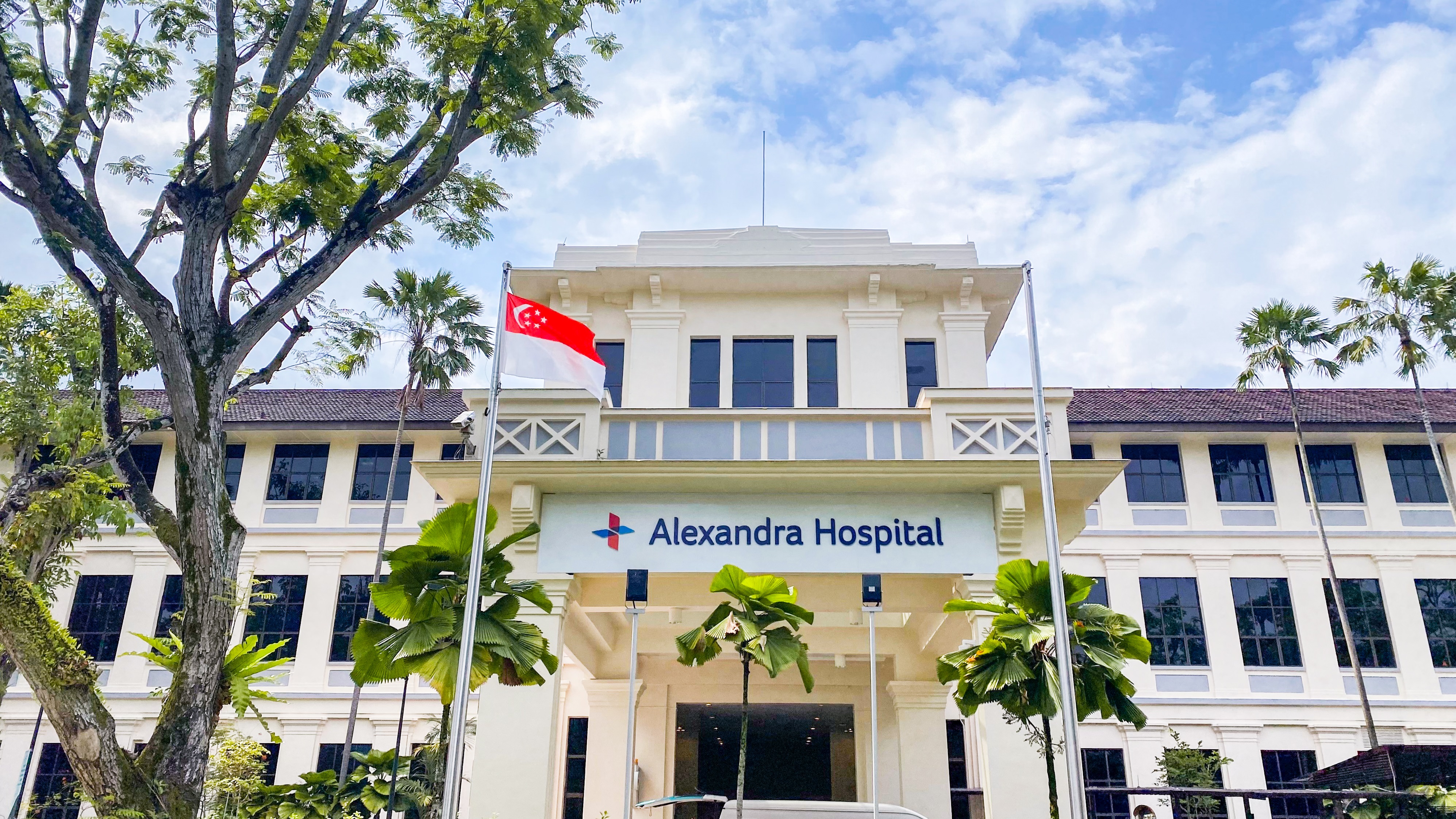
Alexandra Hospital
A conserved healthcare landmark whose tropical design, wartime history and later public service reflect several chapters of Singapore’s past.

Gillman Barracks
Built for British troops in 1936, Gillman Barracks later served the Singapore Armed Forces and became an arts and lifestyle enclave set among conserved military buildings.

Rail Corridor
The former railway alignment recalls the movement of passengers and goods between Singapore and Malaya, while its green corridor now supports walking, cycling and nature.

Alexandra Fire Station
Opened in 1954, the distinctive red-and-white station is one of Queenstown’s heritage landmarks and a lesser-known reminder of Alexandra’s post-war public services.
Trail Routes
Route 1 Alexandra
Discover how a former military landscape became a neighbourhood of healthcare, shopping and food centres.
Duration: 75–105 minutes · Distance: 1.5–1.7 km · Stops: 5
1. Alexandra Hospital
Alexandra Hospital began as a British military hospital and became the site of a wartime massacre in February 1942. It later entered Singapore’s public healthcare system. The hospital links the area’s military past with its continuing role in caring for the community. Read the heritage interpretation without treating a working hospital as a sightseeing venue.
2. Alexandra Fire Station
Alexandra’s earlier fire station was replaced by the integrated Home Team complex, operational from 2005. The current premises bring fire and police services together, continuing the area’s public-service role while showing how an institution’s history can outlast its original building.
3. Queensway Shopping Centre
Queensway Shopping Centre represents an early generation of multipurpose shopping complexes in Singapore. Its compact shops and shared circulation spaces reflect a shift from individual street shops to services gathered within one building, while remaining part of familiar neighbourhood routines.
4. Alexandra Village Food Centre
Alexandra Village developed as a mix of workshops, shops, housing and eating places serving residents and workers. Its food centre reflects the connection between work and neighbourhood life, where meals and shared tables form part of the area’s everyday community heritage.
5. ABC Brickworks Market & Food Centre
ABC Brickworks Market & Food Centre brings together market shopping, meals and nearby homes. Rather than displaying a surviving brick factory, it represents a living neighbourhood whose name preserves a connection to the area’s earlier industrial landscape.
