
LION CITY HUB • NATIONAL EDUCATION & HERITAGE
Tanjong Pagar Heritage Trail
Discover a district shaped by docks, migrant workers, conserved streets and Singapore’s railway history.
Tanjong Pagar’s Harbour Heritage and City Identity
Tanjong Pagar developed beside Singapore’s docks, where labourers and businesses supported a growing port. Its name is commonly translated as “cape of stakes”, recalling the coastal landscape before reclamation. Shophouses, clan associations, places of worship and eating houses served diverse communities.
The railway station, opened in 1932, connected Singapore with the Malay Peninsula and became a major southern gateway. Today, conserved streets stand beside offices and towers, showing how a working harbour district became part of the modern city centre. Railway Station adds another layer to the story.
Its grand façade combines Neoclassical and Art Deco influences, while the platforms recall journeys across the peninsula. Keppel Harbour shows how the area changed while retaining links to its past. Nearby docks and shipping created work for labourers, merchants and service businesses in the surrounding streets. It also shows why the site remains meaningful to local communities today.
Did You Know?
The former Tanjong Pagar Railway Station opened in 1932 as the southern terminus of the Malay Peninsula’s west-coast line, in the area's story today.
Tanjong Pagar forms one of the four subdistricts within the conserved Chinatown Historic District, a detail that gives Tanjong Pagar added meaning.
What Makes Tanjong Pagar Special

Tanjong Pagar Railway Station
Opened in 1932, the monumental station connected Singapore with the Malay Peninsula and remains one of the district’s most recognisable transport and architectural landmarks. It remains visible.
Keppel Harbour
The nearby harbour shaped work and settlement across southern Singapore, supporting dock labour, shipping services and industries that influenced Bukit Merah’s growth. It remains part of local memory.
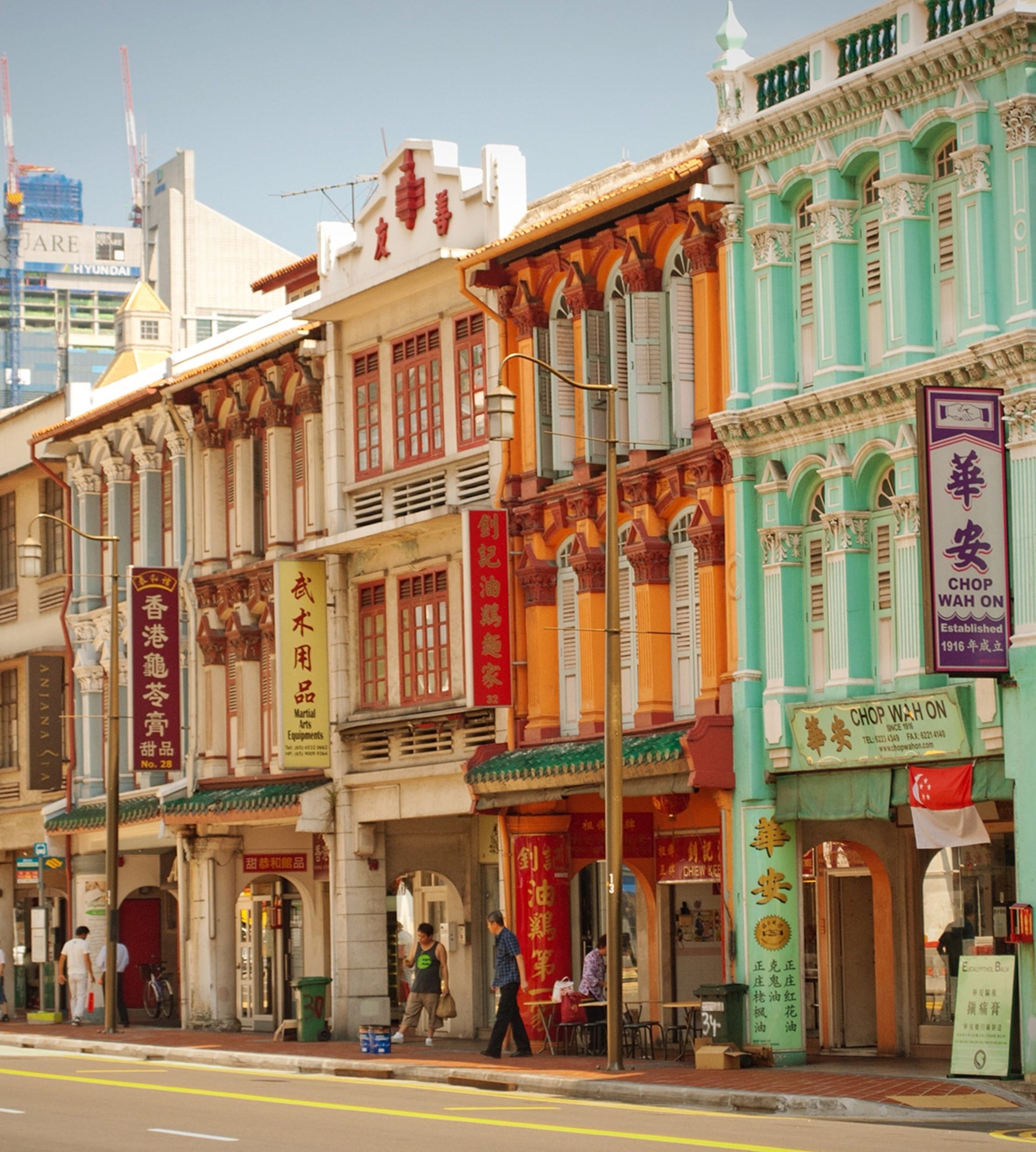
Conserved Shophouses
Rows around Tanjong Pagar Road and Duxton Hill preserve historic scale while supporting changing urban uses. It helps visitors connect Conserved Shophouses with the wider history of Tanjong Pagar.

Jinrikisha Station
The former rickshaw depot reflects an era when hand-pulled vehicles were essential to movement around the port city. Its story adds context to the district's changing landscape and community life.
Trail Routes
Route 1: Faith & Multi-Religious Harmony
-
Duration: 1.5 hours on foot | Distance: 1.2 km
-
Focus: Trace South Bridge Road and Telok Ayer Street to observe Singapore’s religious co-existence, where Buddhist temples, Singapore's oldest Hindu temple, a Chulia mosque, and a Chinese Methodist church stand side by side.
Route 2: Early Immigrants & Street Life
-
Duration: 1 hour on foot | Distance: 900 m
-
Focus: Walk down Pagoda Street, Smith Street, and Sago Lane to discover the history of rickshaw pullers, Samsui women, high-density tenement living, and heritage street murals.
Route 3: Clans, Trade & Pioneer Leaders
-
Duration: 1.5 hours on foot | Distance: 1.8 km
-
Focus: Explore Bukit Pasoh Road, Club Street, and Ann Siang Hill—the historic strongholds of dialect clan associations, elite pioneer clubs, and traditional shophouse architecture.
