
LION CITY HUB • NATIONAL EDUCATION & HERITAGE
Tanglin Halt Industrial Heritage
Remember a pioneering housing and factory estate shaped by Singapore’s early industrialisation drive.
Homes, Factories and Railway Memories
Tanglin Halt grew within Queenstown, Singapore’s first satellite town, beside the former Malayan railway. In the 1960s, its industrial estate offered 38 factory plots for cottage, light and medium industries. Companies produced electronics, garments, chocolate and metal goods, providing work near new public housing.
The Setron factory manufactured Singapore’s first black-and-white television in 1964. Although many original flats and factories have made way for redevelopment, the Rail Corridor and community memories preserve the estate’s role in nation-building. Industrial Estate adds another layer to the story.
Factories near public housing supported Singapore’s shift from an entrepôt economy towards manufacturing. Setron Factory shows how the area changed while retaining links to its past. The electronics factory became known for producing Singapore’s first black-and-white television in 1964. This context helps readers connect the place with Singapore's wider development.
Did You Know?
Tanglin Halt Industrial Estate covered about 20 acres and offered 38 factory plots for small and medium industries, both historically and today.
Setron produced Singapore’s first locally assembled black-and-white television at Tanglin Halt in 1964, helping explain the area's identity today.
What Makes Tanglin Halt Special
Tanglin Halt Industrial Estate
One of Singapore’s early industrial estates placed factories close to new public housing, supporting the shift from an entrepôt economy towards manufacturing in the 1960s. It remains visible.
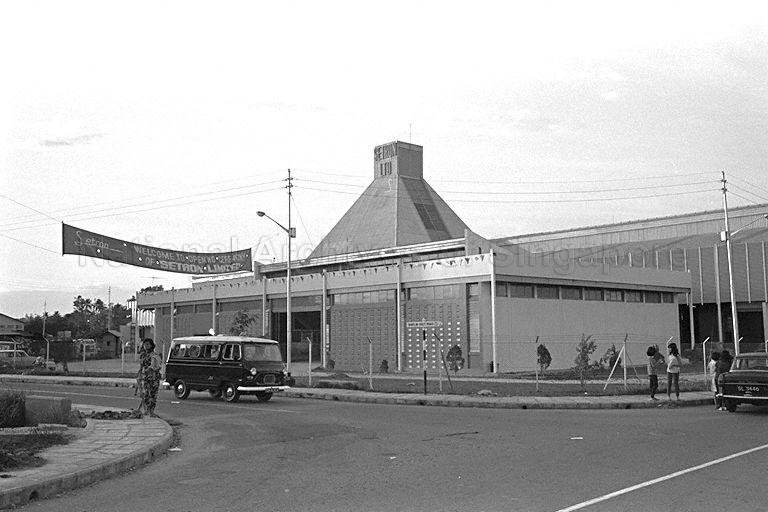
Setron Factory
The electronics factory became known for producing Singapore’s first black-and-white television in 1964. It helps visitors connect Setron Factory with the wider history of Tanglin Halt. This added.

Rail Corridor
The former railway alignment recalls the movement of passengers and goods between Singapore and Malaya, while its green corridor now supports walking, cycling and nature. It remains visible.

Singapore’s First Flatted Factory
Block 115 Commonwealth Drive introduced multi-storey industrial space in 1965, a lesser-known innovation that allowed factories to operate vertically on limited urban land. It is still remembered.
Trail Routes
Route 1: Faith & Multi-Religious Harmony
-
Duration: 1.5 hours on foot | Distance: 1.2 km
-
Focus: Trace South Bridge Road and Telok Ayer Street to observe Singapore’s religious co-existence, where Buddhist temples, Singapore's oldest Hindu temple, a Chulia mosque, and a Chinese Methodist church stand side by side.
Route 2: Early Immigrants & Street Life
-
Duration: 1 hour on foot | Distance: 900 m
-
Focus: Walk down Pagoda Street, Smith Street, and Sago Lane to discover the history of rickshaw pullers, Samsui women, high-density tenement living, and heritage street murals.
Route 3: Clans, Trade & Pioneer Leaders
-
Duration: 1.5 hours on foot | Distance: 1.8 km
-
Focus: Explore Bukit Pasoh Road, Club Street, and Ann Siang Hill—the historic strongholds of dialect clan associations, elite pioneer clubs, and traditional shophouse architecture.
