
LION CITY HUB • NATIONAL EDUCATION & HERITAGE
Lavender Heritage Trail
Discover how vegetable gardens, trades and conserved shophouses shaped this lively corner near Jalan Besar.
Lavender’s Ironic Name and Shophouse Streets
Lavender Street was officially named in 1858. According to a popular account, the name was suggested ironically by residents because the area smelled unpleasant, either from nightsoil used on nearby vegetable gardens or from the gasworks. Its Hokkien name meant “within the vegetable gardens”, while a Tamil name referred to a potters’ street.
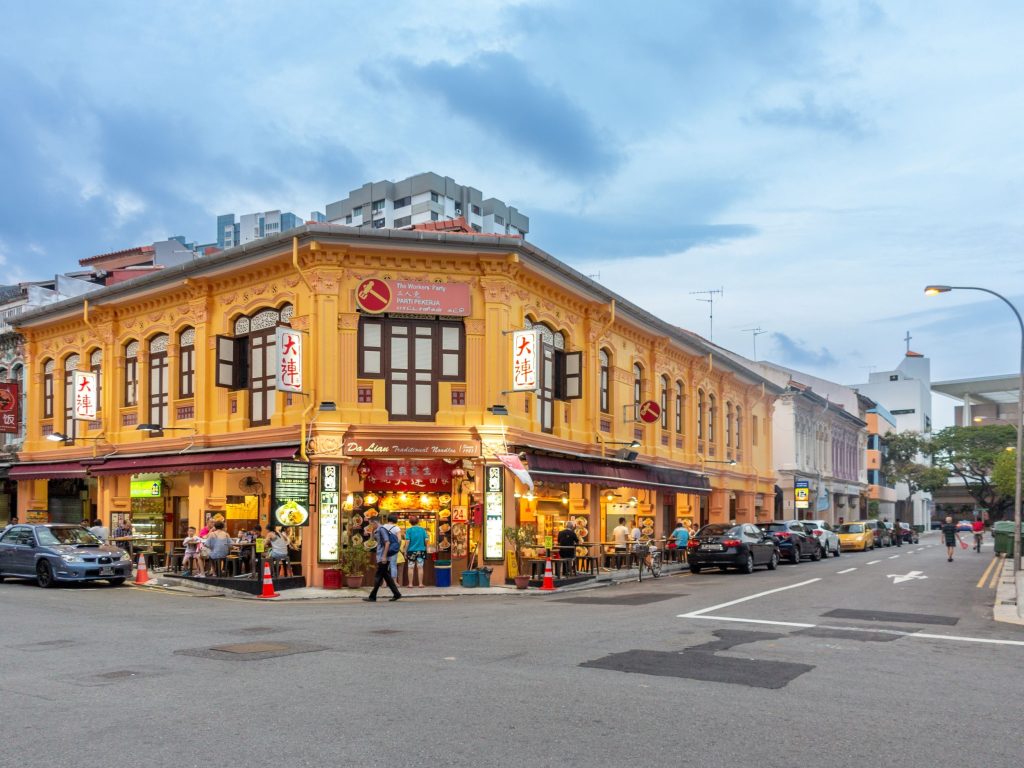
As the city expanded beyond its old core, shophouses, workshops and trading businesses filled the streets between Kallang Road and Jalan Besar. Some buildings were conserved, giving the area a varied mix of old façades and new uses.
Today, Lavender Place at 161 Lavender Street shows conserved Art Deco design, while the Jalan Besar shophouses nearby keep the area’s historic streetscape. Lavender Street itself still carries its curious name, and the Tai Pei Buddhist Centre offers a quieter spiritual landmark.
Did You Know?
Lavender Street’s ironic name is said to have been suggested by residents because the area smelled unpleasant.
The Tai Pei Buddhist Centre was set up at 2 Lavender Street in 1990.


What Makes Lavender Special

Lavender Street
Officially named in 1858, the street is known for its ironic name, which recalls a time of vegetable gardens and unpleasant smells.

Lavender Place
The former premises of the Lee Rubber Company at 161 Lavender Street, this Art Deco building won a URA Architectural Heritage Award in 1995.

Jalan Besar Shophouses
Conserved shophouses in the neighbouring Jalan Besar area show a range of façades and now house eateries, workshops and small businesses.

Tai Pei Buddhist Centre
Established in 1990 at 2 Lavender Street, this Buddhist centre is a quieter landmark among the busy roads of the city fringe.
Trail Routes
Route 1 Art Deco, Shophouses & Football
Explore how distinctive architecture, conserved streets and sporting memories reveal different layers of Lavender’s urban history.
Duration: 60–90 minutes · Distance: Approx. 1.5 km · Stops: 4
1. Tai Pei Buddhist Centre
The centre forms part of a wider Buddhist organisation associated with welfare and community activities. Its presence adds a spiritual and social institution to the Lavender streetscape.
2. Lavender Place
The conserved Art Deco shophouses were once premises of the Lee Rubber Company. Their curved forms and decorative details preserve a distinctive layer of Lavender’s commercial history.
3. Tyrwhitt Road Shophouses
The shophouse streets around Tyrwhitt Road reveal the older fabric of Jalan Besar. Their façades connect contemporary neighbourhood businesses with the district’s earlier residential and commercial growth.
4. Jalan Besar Stadium
Opened in 1929, Jalan Besar Stadium became an important home of local football. Its history adds sporting memories to the surrounding neighbourhood of shophouses and community institutions.
The Farrer Park heritage trail adds another perspective on the religious institutions and urban memories of the surrounding district.
Interested in planning or booking the Lavender heritage trail? Please contact us by filling out the form below.
