
LION CITY HUB • NATIONAL EDUCATION & HERITAGE
Kampong Gelam Heritage Trail
Explore a historic Malay royal quarter shaped by faith, trade and communities from across the region.
A Royal and Trading District
Kampong Gelam was set aside for Sultan Hussein Shah and the Malay and Muslim communities in the 1822 town plan. Its location near the sea supported merchants, sailors and craftspeople from the Malay Archipelago, Arabia, India and beyond. Sultan Mosque became the district’s spiritual landmark, while shophouses along Arab Street and nearby lanes supported textiles, publishing, food and lodging.
Today, conserved streets and the former palace grounds keep the precinct’s royal, commercial and community histories visible. Sultan Mosque adds another layer to the story. The district’s main religious landmark serves Singapore’s Muslim community and anchors the historic streets around it.
Istana Kampong Gelam shows how the area changed while retaining links to its past. The former royal residence now houses the Malay Heritage Centre, connecting visitors with Malay history and culture. This context helps readers connect the place with Singapore's wider development.
Did You Know?
Kampong Gelam was traditionally a Malay royal quarter centred on the sultan’s residence and Sultan Mosque, and an important part of its local story.
Street names such as Arab Street, Baghdad Street and Bussorah Street reflect the district’s trading connections, and a visible link with its past.
What Makes Kampong Gelam Special
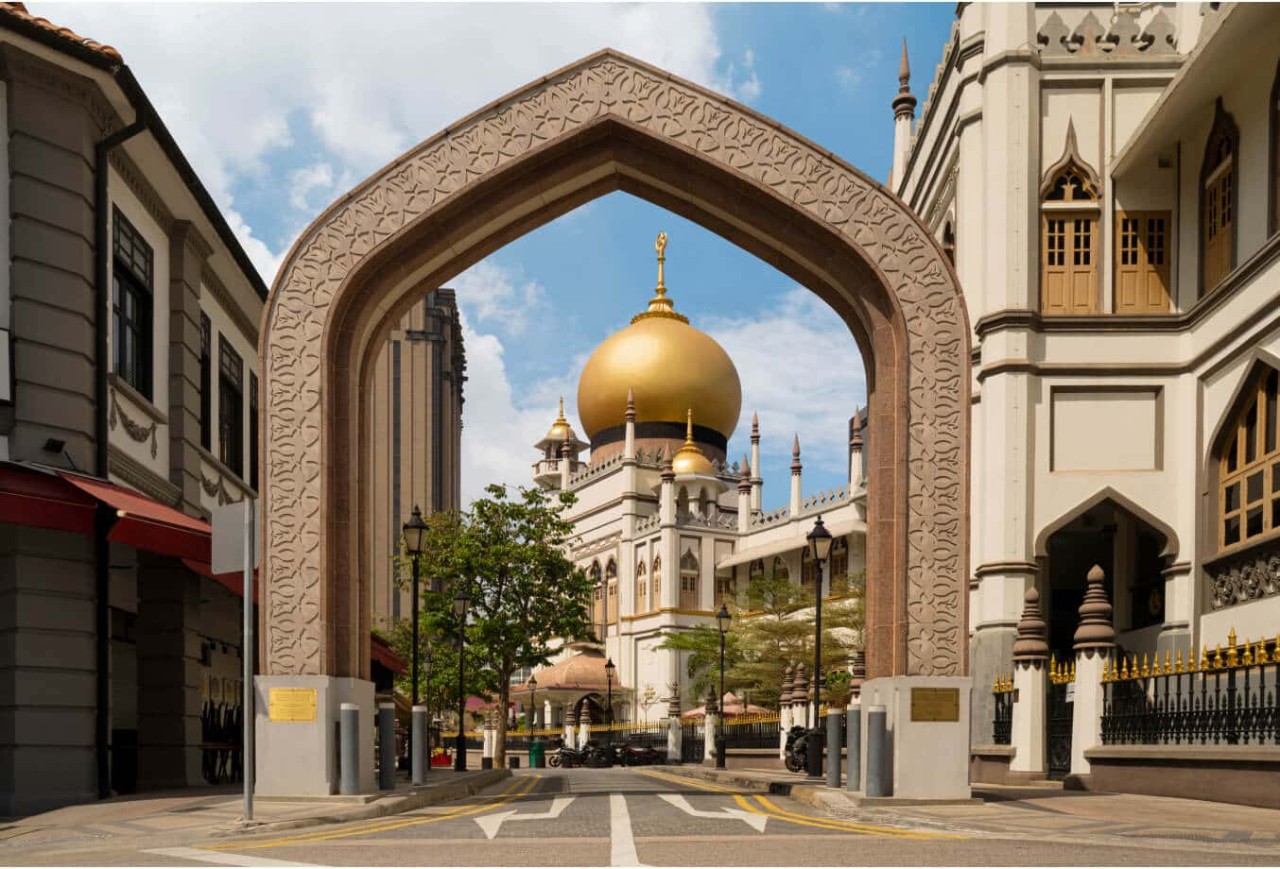
Sultan Mosque
The district’s main religious landmark serves Singapore’s Muslim community and anchors the historic streets around it. It helps visitors connect Sultan Mosque with the wider history of Kampong Gelam.
Istana Kampong Gelam
The former royal residence now houses the Malay Heritage Centre, connecting visitors with Malay history and culture. Its story adds context to the district's changing landscape and community life.
Arab Street
Textile shops and trading businesses helped make this street a commercial centre for regional Muslim communities. It helps visitors connect Arab Street with the wider history of Kampong Gelam.

Gelam Trees
Kampong Gelam is commonly linked to the gelam tree, whose bark and leaves were used for practical purposes. Few visitors notice this botanical connection behind the precinct’s name. It endures.
Trail Routes
Route 1: Faith & Multi-Religious Harmony
-
Duration: 1.5 hours on foot | Distance: 1.2 km
-
Focus: Trace South Bridge Road and Telok Ayer Street to observe Singapore’s religious co-existence, where Buddhist temples, Singapore's oldest Hindu temple, a Chulia mosque, and a Chinese Methodist church stand side by side.
Route 2: Early Immigrants & Street Life
-
Duration: 1 hour on foot | Distance: 900 m
-
Focus: Walk down Pagoda Street, Smith Street, and Sago Lane to discover the history of rickshaw pullers, Samsui women, high-density tenement living, and heritage street murals.
Route 3: Clans, Trade & Pioneer Leaders
-
Duration: 1.5 hours on foot | Distance: 1.8 km
-
Focus: Explore Bukit Pasoh Road, Club Street, and Ann Siang Hill—the historic strongholds of dialect clan associations, elite pioneer clubs, and traditional shophouse architecture.
