
LION CITY HUB • NATIONAL EDUCATION & HERITAGE
Civic District Heritage Trail
Walk through the historic centre where Singapore’s government, arts and national memory took shape.
The Heart of Civic Singapore
The Civic District developed around the north bank of the Singapore River, where colonial administrators built offices, courts, places of worship and public spaces. Many buildings later took on new roles as museums, galleries and cultural venues. The district also witnessed major national moments, including the Japanese surrender in 1945 and Singapore’s steps towards self-government and independence.
Its open spaces and monuments make the area an accessible introduction to the country’s political and architectural history. National Gallery Singapore adds another layer to the story. The former Supreme Court and City Hall have been joined and adapted into a major museum of Singapore and Southeast Asian art.
The Padang shows how the area changed while retaining links to its past. This open field has long served as a civic stage for sport, parades and events connected with Singapore’s national story. This context helps readers connect the place with Singapore's wider development.
Did You Know?
Many former colonial offices in the Civic District now serve as museums, galleries and cultural institutions, an important detail in the local story.
The Padang has hosted military parades, sporting events and major national ceremonies across different eras, an important detail in the local story.
What Makes Civic District Special
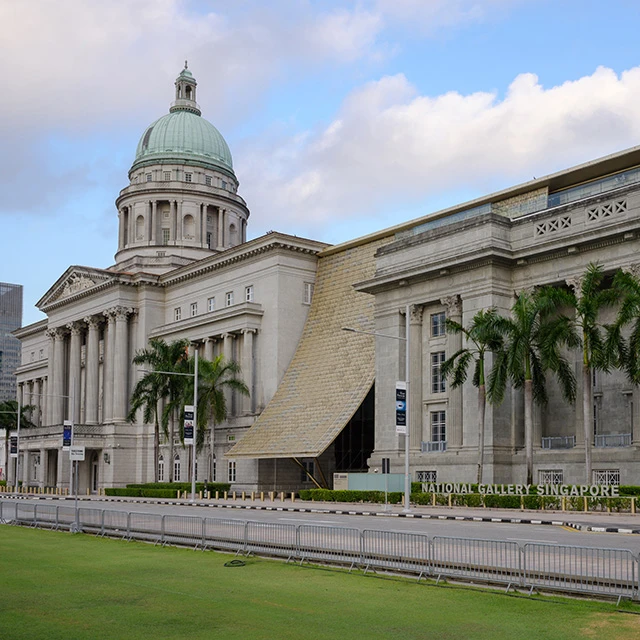
National Gallery Singapore
The former Supreme Court and City Hall have been joined and adapted into a major museum of Singapore and Southeast Asian art. It also shows why the site remains meaningful to local communities today.
The Padang
This open field has long served as a civic stage for sport, parades and events connected with Singapore’s national story. It helps visitors connect The Padang with the wider history of Civic District.

Asian Civilisations Museum
Housed in the former Empress Place Building, the museum explores the cultures connected through Singapore’s historic trade routes. This added context gives readers a fuller understanding of the.

Dalhousie Obelisk
This modest monument near the Singapore River commemorates the 1850 visit of the Marquess of Dalhousie and is easily missed beside the district’s grander civic landmarks. It links past and present.
Trail Routes
Route 1: Faith & Multi-Religious Harmony
-
Duration: 1.5 hours on foot | Distance: 1.2 km
-
Focus: Trace South Bridge Road and Telok Ayer Street to observe Singapore’s religious co-existence, where Buddhist temples, Singapore's oldest Hindu temple, a Chulia mosque, and a Chinese Methodist church stand side by side.
Route 2: Early Immigrants & Street Life
-
Duration: 1 hour on foot | Distance: 900 m
-
Focus: Walk down Pagoda Street, Smith Street, and Sago Lane to discover the history of rickshaw pullers, Samsui women, high-density tenement living, and heritage street murals.
Route 3: Clans, Trade & Pioneer Leaders
-
Duration: 1.5 hours on foot | Distance: 1.8 km
-
Focus: Explore Bukit Pasoh Road, Club Street, and Ann Siang Hill—the historic strongholds of dialect clan associations, elite pioneer clubs, and traditional shophouse architecture.
