
LION CITY HUB • NATIONAL EDUCATION & HERITAGE
Bugis Heritage Trail
Explore a district shaped by seafaring traders, places of worship and one of Singapore’s best-known streets.
Bugis’s Seafaring Name and Street Culture
Bugis takes its name from the Bugis seafarers of South Sulawesi, who traded along the coast and settled near the Kampong Glam area in the early 19th century. Early town plans marked a Bugis settlement close to the Sultan’s compound.
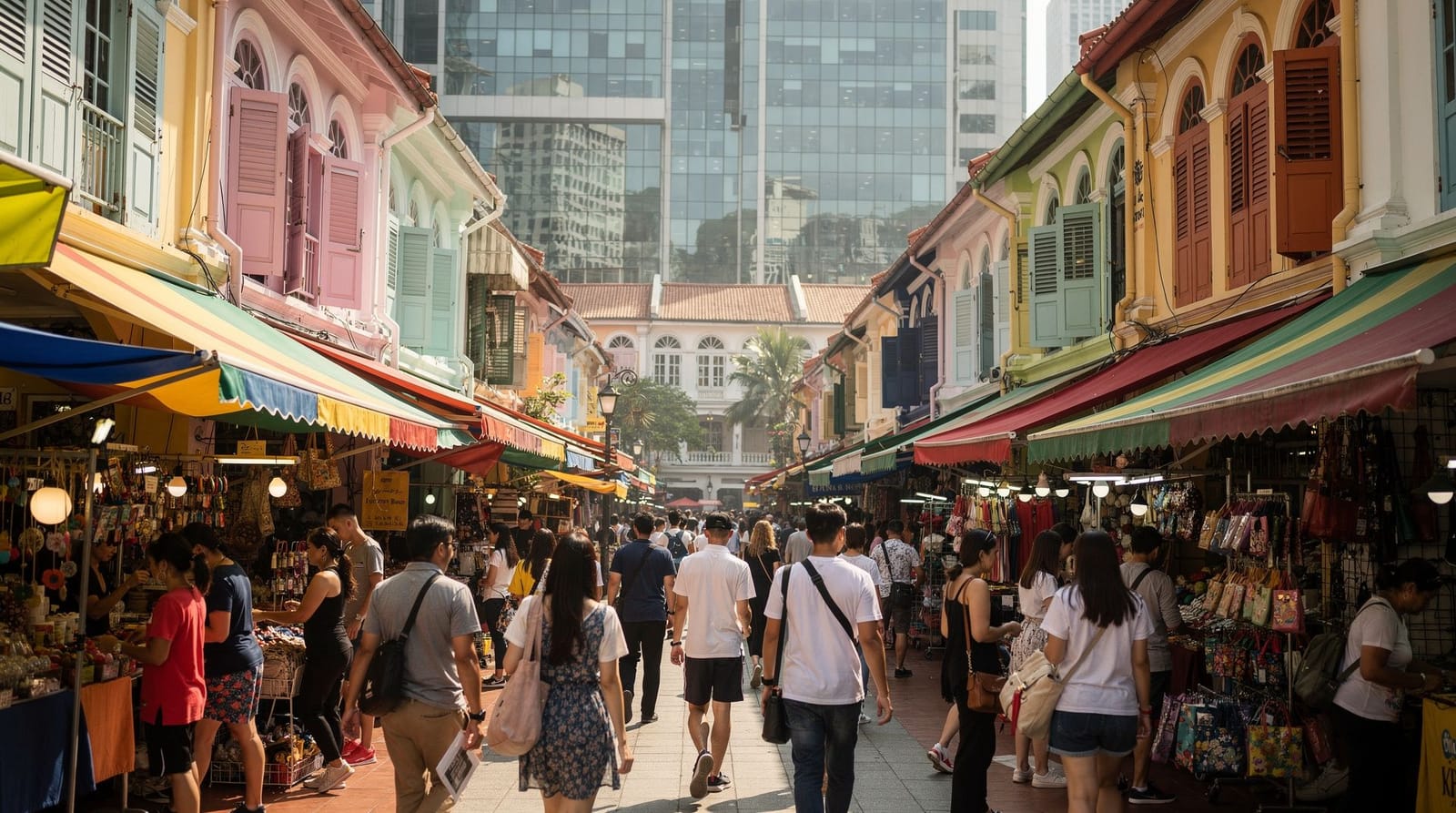
From the 1950s, Bugis Street became famous for its night-time stalls and lively street scene. The original street was cleared in the 1980s for MRT works, and in the early 1990s Malay, Hylam and Malabar Streets were redeveloped into Bugis Junction.
Today, Bugis Street remains a busy market for shopping and snacks, and Bugis Junction keeps a glass-covered shophouse street. Kwan Im Thong Hood Cho Temple on Waterloo Street draws many worshippers, while the Maghain Aboth Synagogue, consecrated in 1878, is a quiet landmark nearby.
Did You Know?
Maghain Aboth Synagogue, consecrated in 1878, is the oldest surviving synagogue in Southeast Asia.
Bugis Junction kept part of Malay, Hylam and Malabar Streets under a glass roof as an indoor shophouse street.

Photo: Adjoajo | CC BY-SA 4.0 | https://creativecommons.org/licenses/by-sa/4.0 | https://commons.wikimedia.org/wiki/File:Singapore-Bugis_Street.jpg

Photo: Source photographer; open license not verified | Not verified | http://creativecommons.org/publicdomain/zero/1.0/deed.en | https://www.designinternational.com/projects/bugis-junction

Photo: Smuconlaw. | CC BY-SA 3.0 | https://creativecommons.org/licenses/by-sa/3.0 | https://commons.wikimedia.org/wiki/File:Maghain_Aboth_Synagogue,_Singapore_-_20110909-03.jpg
Photo: Adjoajo | CC BY-SA 4.0 | https://creativecommons.org/licenses/by-sa/4.0 | https://commons.wikimedia.org/wiki/File:Singapore-Bugis_Street.jpg
What Makes Bugis Special

Bugis Street
Rebuilt after the original street was cleared in the 1980s, today’s Bugis Street is a busy market for clothing, souvenirs and local snacks.
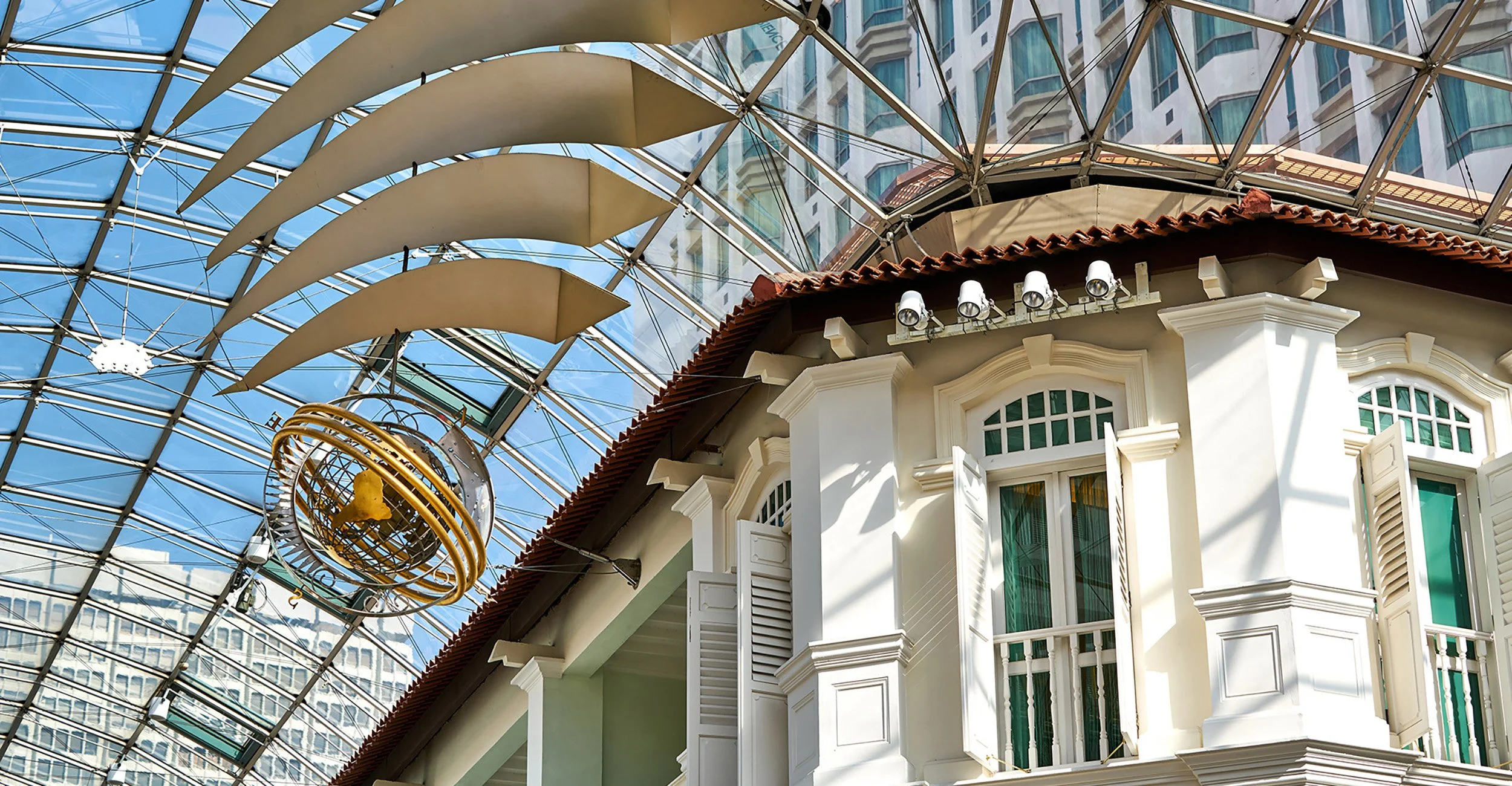
Bugis Junction
Developed in the 1990s on Malay, Hylam and Malabar Streets, the mall kept conserved shophouses under a glass roof.

Kwan Im Thong Hood Cho Temple
This Waterloo Street temple dedicated to Guan Yin is one of Singapore’s most visited Chinese temples, especially during festivals.

Maghain Aboth Synagogue
Consecrated in 1878 and gazetted as a national monument in 1998, this quiet synagogue is the oldest surviving one in Southeast Asia.
Trail Routes
Route 1 Old Streets & Waterloo Faiths
Explore how older shopping streets and Waterloo Street’s places of worship preserve Bugis’ diverse community histories.
Duration: 60–90 minutes · Distance: Approx. 1.3 km · Stops: 5
1. Bugis Junction
Malay, Hylam and Malabar Streets became part of Bugis Junction in the 1990s. Their retained street alignments connect today’s shopping district with the area’s older urban fabric.
2. Bugis Street Market
The market introduces Bugis through its busy everyday street life. Shops and food stalls provide a contemporary starting point for exploring the older neighbourhood around Waterloo Street.
3. Kwan Im Thong Hood Cho Temple
Dedicated to Guanyin, this Waterloo Street temple remains a prominent place of worship. Its active religious life is an enduring part of the district’s community identity.
4. Sri Krishnan Temple
Founded in 1870, Sri Krishnan Temple stands close to its Chinese temple neighbour. Their proximity makes Waterloo Street a compact setting for understanding Singapore’s shared religious landscape.
5. Maghain Aboth Synagogue
Maghain Aboth is Southeast Asia’s oldest surviving synagogue. Its presence preserves the story of Singapore’s Jewish community within a district shared by several longstanding religious institutions.
For more of the surrounding district’s trading streets, waterways and community history, explore the Rochor heritage trail.
Interested in planning or booking the Bugis heritage trail? Please contact us by filling out the form below.
